Starting an online business doesn’t have to mean managing inventory, handling shipping, or dealing with customer returns.
One of the smartest ways to earn money online is by creating an Amazon affiliate store using WordPress. Plus, it’s far simpler than you might think.
But setting up your first affiliate store can feel overwhelming. From picking the right tools to optimizing your site for clicks, there are several critical steps you need to nail if you want to actually make money.
That’s where I come in.
After building multiple affiliate stores and testing different approaches, I’ve learned exactly what works and what wastes your time.
In this guide, I’ll walk you through creating a professional Amazon affiliate store using WordPress and WooCommerce. The same setup I use for my own affiliate projects.
The best part? You can start for less than $2 per month with free plugins that deliver professional results.
Ready to build your Amazon affiliate store? Let’s dive in.
What Is an Amazon Affiliate Store?
An Amazon affiliate store is an online store that promotes products available on Amazon using special referral links.
Instead of stocking inventory or shipping products yourself, you’re essentially acting as a middleman, guiding visitors to Amazon where they complete their purchase.
When someone clicks your affiliate link and buys something, even if it’s not the exact product you linked to, you earn a commission.
This is called affiliate marketing, and it’s one of the most beginner-friendly business models online.
Here’s why Amazon affiliate stores work so well:
- No Inventory or Fulfillment Headaches: You never touch a product. Amazon handles all storage, packing, shipping, returns, and customer service. Your only job is to drive qualified traffic to your store.
- Minimal Startup Costs: Since you’re not buying products upfront, your initial investment is tiny. You need WordPress hosting, a domain name, and an SSL certificate. All of which can cost as little as $1.99 per month with providers like Bluehost.
- Massive Product Selection: Amazon’s catalog includes hundreds of millions of products across every category imaginable. Whether you run a food blog, a tech review site, or a home improvement resource, you’ll find relevant products to promote.
- Proven Trust and Conversion: Most people already trust Amazon and have accounts there. You’re not convincing them to trust a new store. Just redirecting them somewhere they’re already comfortable buying.
⚠️ One critical note: You cannot add Amazon affiliate links to sites primarily aimed at children under 13. This is a strict requirement in Amazon’s terms of service.
Amazon Affiliate Sites Examples
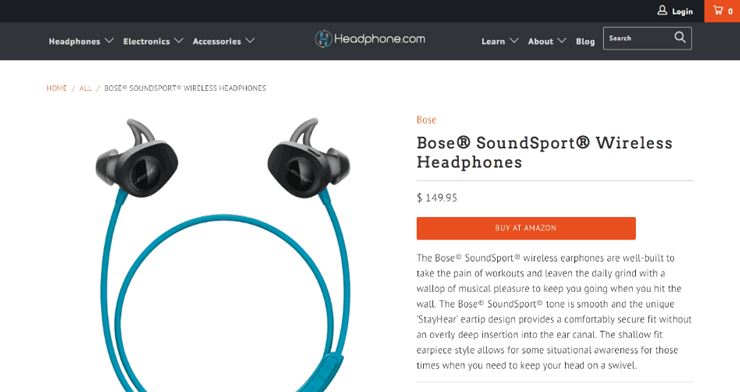
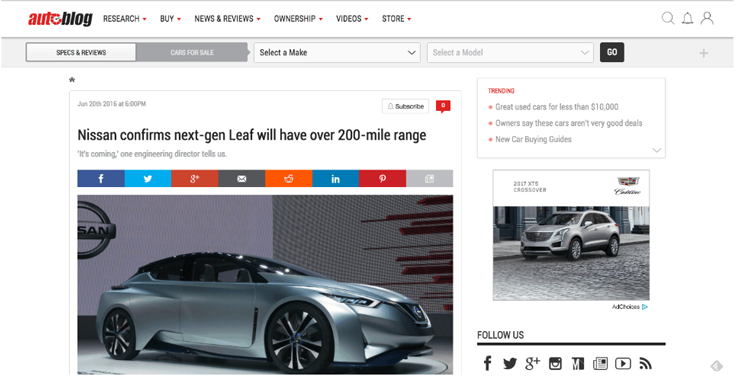
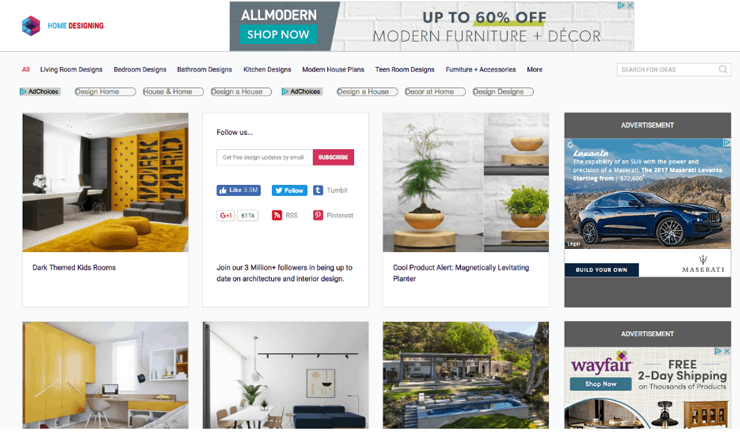
If you’re wondering what an Amazon affiliate marketing store would look like, here are a few examples to inspire you.
1. First Example: www.headphones.com
2. Second Example: www.autoblog.com
3. Third Example: www.home-designing.com
Starting an Amazon Affiliate Store (Step by Step)
In the following sections, I’ll show you exactly how to build your Amazon affiliate store step by step. If you want to jump to a specific section, use these links:
- Step 1. Getting Started With WooCommerce and WordPress
- Step 2. Sign Up for the Amazon Associates Program
- Step 3. How to Find the Best Products for Your Amazon Affiliate Site
- Step 4. Adding Amazon Affiliate Products in WooCommerce
- Step 5. Customizing Your WordPress Amazon Affiliate Store
- Bonus Tip: Resources to Grow Your Amazon Affiliate Store
- Keep Growing Your Store
- FAQs: Running an Amazon Affiliate Store Using WordPress
- Final Verdict: Should You Build an Amazon Affiliate Store?
- Resource Hub: Build a Successful Affiliate Business
Here is a quick table so that you can see everything you need before you begin.
| What You Need | Details | Cost | Notes |
|---|---|---|---|
| WordPress Hosting | Bluehost, Hostinger or similar hosting provider | $1.99-15/month | Includes free domain & SSL certificate |
| Domain Name | Your website address | Free | Included with Bluehost hosting |
| SSL Certificate | Security for your site | Free | Included with Bluehost hosting |
| Amazon Associates Account | Free affiliate program membership | $0 | Need 3 sales in first 180 days to stay active |
| WooCommerce Plugin | Free WordPress e-commerce plugin | $0 | Handles all product display functionality |
| WordPress Theme | Design for your store | $0 | Free WooCommerce themes available, premium optional |
| Products to Promote | Start with 10-15 products | $0 | No inventory needed - Amazon handles everything |
| Time Investment | Initial setup + ongoing content | ~5 hours setup | Then 2-5 hours weekly for content and products |
Let’s get started.
Step 1. Getting Started With WooCommerce and WordPress
There are dozens of WordPress eCommerce plugins you could use to build an Amazon affiliate store, but I always recommend WooCommerce.
It’s powerful, flexible, completely free, and powers millions of online stores worldwide.
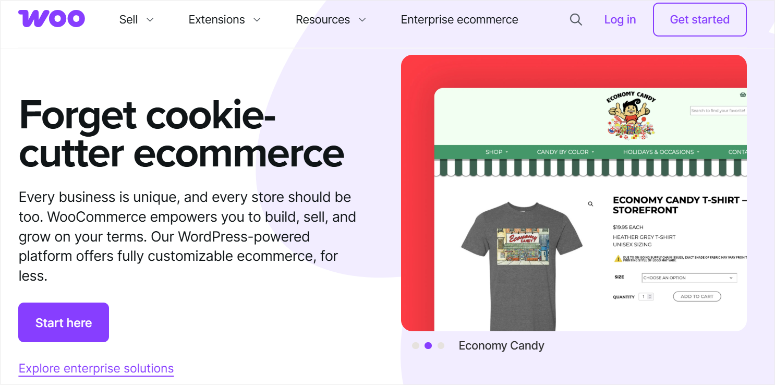
More importantly, WooCommerce has built-in support for external/affiliate products, which makes it perfect for Amazon affiliate stores.
Before we dive in, let’s clear up one common point of confusion: There are two types of WordPress.
You need WordPress.org, the self-hosted version, not WordPress.com. If you’re unsure about the difference, check out my guide explaining WordPress.com vs WordPress.org.
To get started, you’ll need three things:
- WordPress hosting – This is where your website files live
- A domain name – Your website address (like yourstore.com)
- An SSL certificate – This encrypts data and shows the padlock in browsers
Now, you might be thinking: “I’m just promoting Amazon products. Why do I need an SSL certificate?”
Here’s why: While Amazon handles payments for affiliate sales, you’ll likely want to expand eventually.
Maybe you’ll sell your own digital products, add email capture forms, or even sell physical products alongside your affiliate offers. An SSL certificate is essential for all of these, and it helps with SEO too.
Normally, setting all this up gets expensive fast:
- Domain name: ~$14.99/year
- Hosting: Starting at $7.99/month
- SSL certificate: $50-200/year
That’s a significant upfront investment for a new affiliate business.
The good news?
Our friends at Bluehost, an official WordPress and WooCommerce-recommended hosting provider, offer IsItWP readers a free domain name, a free SSL certificate, and over 60% off hosting.
Bluehost offers a WooCommerce hosting plan with everything you need to run an online store.
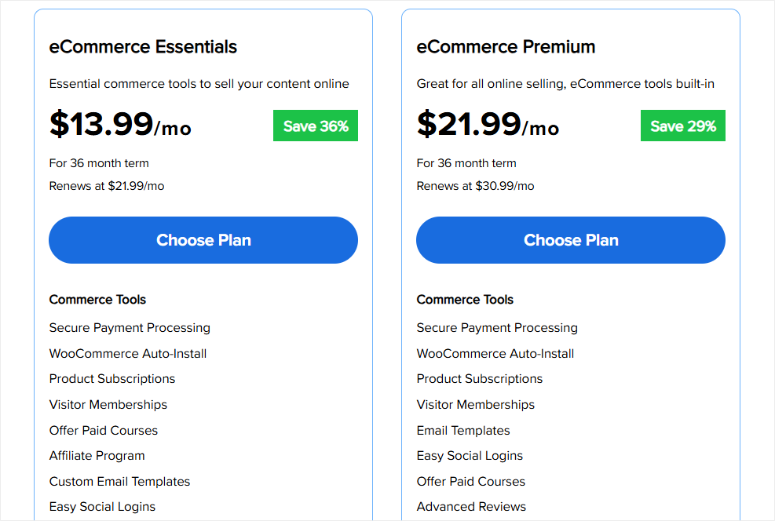
But you can start with their shared hosting plan, which starts at just $1.99/month and upgrade your hosting as your site grows.
→ Click Here to Claim This Exclusive Bluehost Offer ←
If Bluehost doesn’t meet your needs, check out my post on WooCommerce hosting compared for more options.
Installing WordPress and WooCommerce
After signing up for Bluehost, you’ll need to install WordPress. Don’t worry, Bluehost makes this ridiculously easy with their one-click installer.
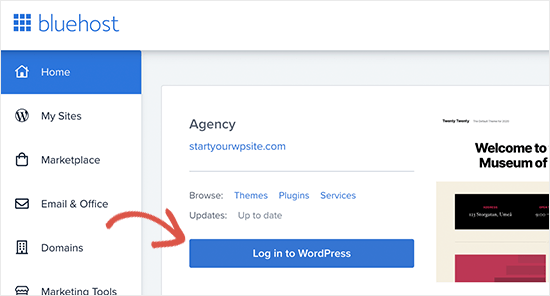
For detailed step-by-step instructions, see my complete WordPress installation guide.
Once you set up WordPress, it’s time to install WooCommerce.
Go to Plugins → Add New in your WordPress dashboard. Search for “WooCommerce” and click Install Now, then Activate.
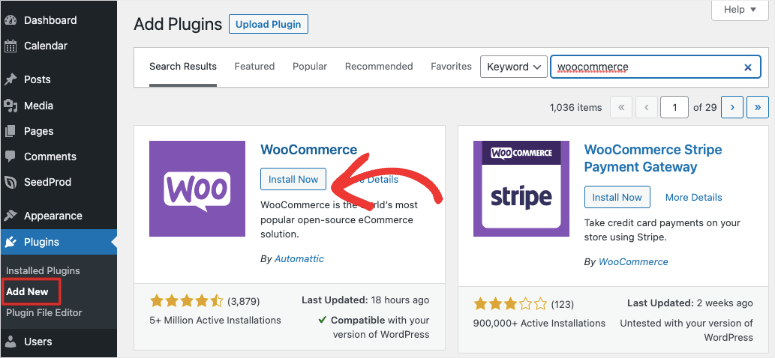
For more details on installing plugins, see my guide on how to install a WordPress plugin.
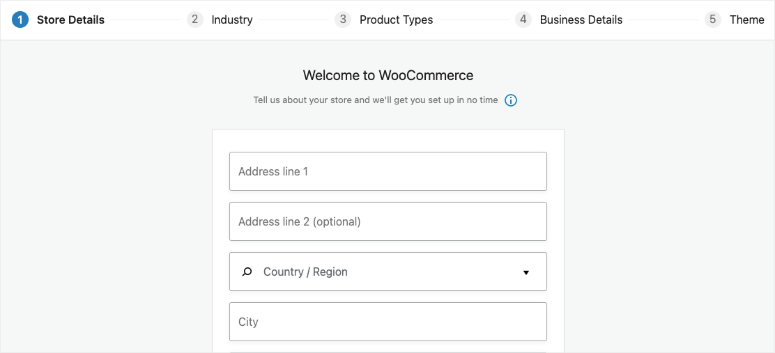
After activation, WooCommerce will launch a setup wizard asking for your store address, industry, and product types.
You can skip all of this, because we’re not running a traditional WooCommerce store that processes payments.
We’re building an affiliate store where Amazon handles everything. The default WooCommerce settings don’t apply to our use case.
That’s it! You now have WordPress and WooCommerce installed and ready to build your Amazon affiliate store.
Step 2. Sign Up for the Amazon Associates Program
Now that WordPress and WooCommerce are installed, you need to join the Amazon Associates program to get your affiliate links.
Here’s something important to understand: Amazon will initially approve most applications, but this approval is provisional.
To keep your account active, you must generate at least 3 qualified sales within your first 180 days. If you don’t hit this target, Amazon will close your account.
This means you need real traffic and real engagement before applying.
I recommend building out your site with quality content first, then applying once you have some traffic. If you need help driving traffic, see my WordPress SEO full guide and then check out the best SEO tools.
When you’re ready to apply, head over to the Amazon Associates website and click Sign Up.
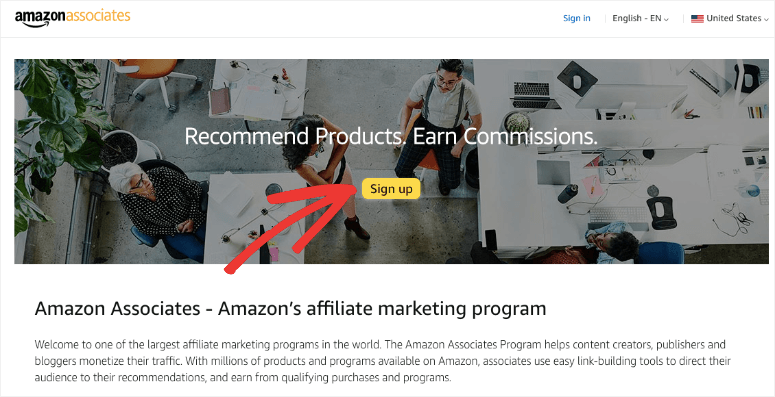
You’ll be asked to log in with an existing Amazon account or create a new one. There’s no need to create a separate “affiliate account” if you already have an Amazon account.
Just use your regular Amazon login credentials.
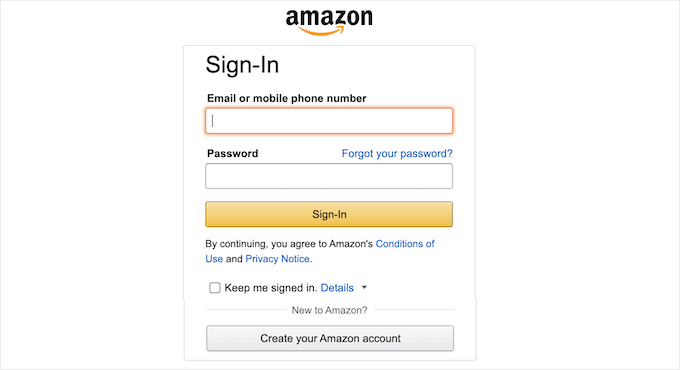
If you don’t have an Amazon account yet, click Create your Amazon account and follow the prompts.
Setting Up Your Payee Information
After logging in, Amazon will ask who should receive your affiliate payments. By default, they’ll use the primary address associated with your Amazon account.
If you’re happy with this, select “The payee listed above” and click Next.
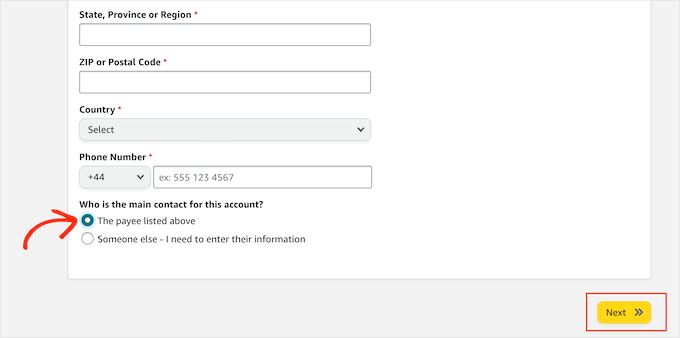
If you want payments sent to a different person or business entity, select “Someone else” and enter their name and contact information.
This is useful if you’re setting up the store for a client or running it under a business name.
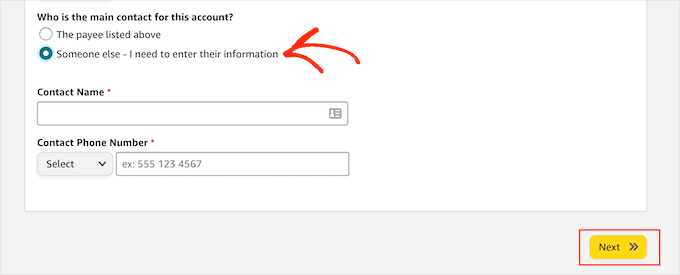
After clicking Next, you’ll add your website domains.
Adding Your Website Domains
On the next screen, type in the domain where you’ll be placing your Amazon affiliate links, then click Add.
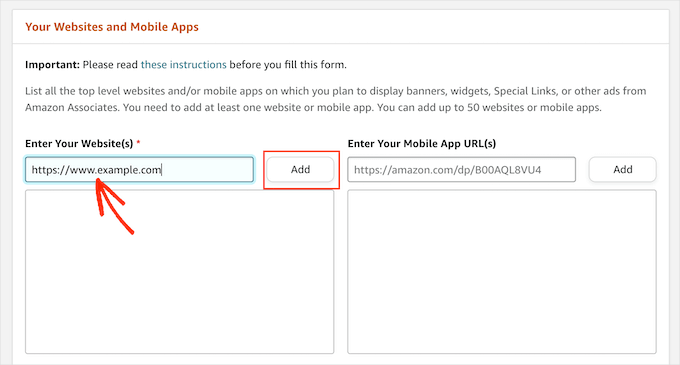
If you plan to promote Amazon products across multiple websites, you can add up to 50 domains. Just repeat the process for each site.
After adding all your domains, click Next.
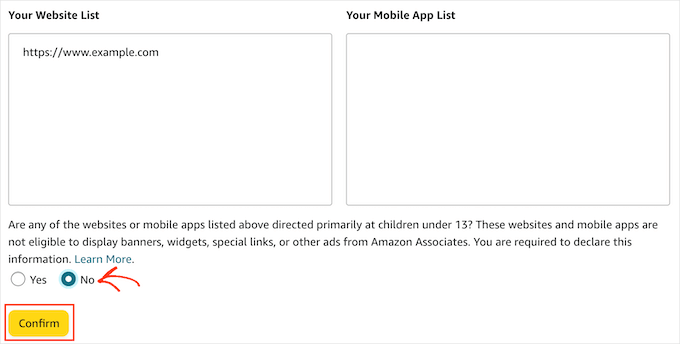
After this, Amazon will ask you to confirm that your website is not primarily aimed at children under 13. Select No and click Confirm.
Creating Your Associates Store ID
Now comes an important step: creating your Associates Store ID. This unique identifier tracks all your commissions and appears in your affiliate links.
So,on the next screen, type your preferred ID into the “What is your preferred Associates Store ID?” field. I recommend using your website name or business name to keep things organized.
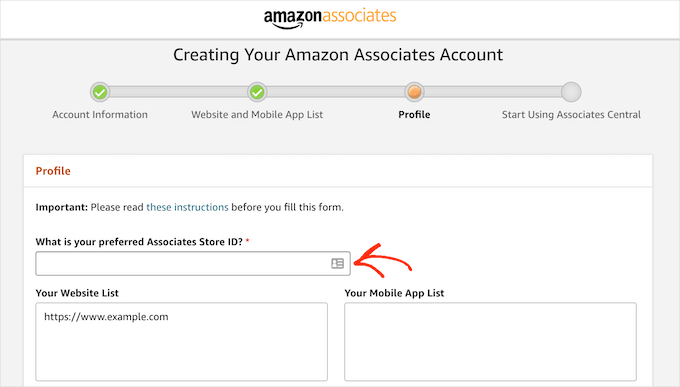
After this, Amazon will automatically format this into a proper ID (usually by adding “-20” to the end).
Next, you’ll answer some questions about your site:
- What topics do you cover? Select the categories that match your niche
- What products will you promote? Choose the main product categories you’ll focus on
- How do you drive traffic? Select your primary traffic sources (SEO, social media, email, etc.)
- How do you build links? Explain how you’ll integrate affiliate links (in-content links, product showcases, etc.)
- Monthly visitors: Enter your estimated monthly traffic (use Google Analytics if you have it installed)
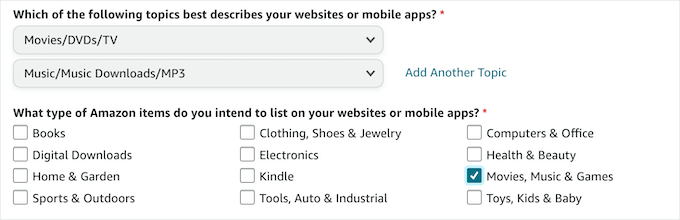
Once you’ve completed all fields, click Finish.
Congratulations! You’re now an Amazon Associate. Time to find products to promote.
⚠️ Note: There’s also the Amazon Influencer Program, which is designed for social media creators with large followings. But the regular Associates program is better for website owners and bloggers.
Step 3. How to Find the Best Products for Your Amazon Affiliate Site
Now that you’re approved as an Amazon Associate, it’s time to find products to promote in your store.
You can create affiliate links for nearly any physical or digital product sold on Amazon, though there are some exceptions, like Amazon Pharmacy products.
Let me show you the two easiest ways to find and create affiliate links.
Method 1: Using Amazon Associates Central
Start by logging into your Amazon Associates account. Once inside, scroll down to the bottom of the page. You’ll see a section called “Recommended Products for You”
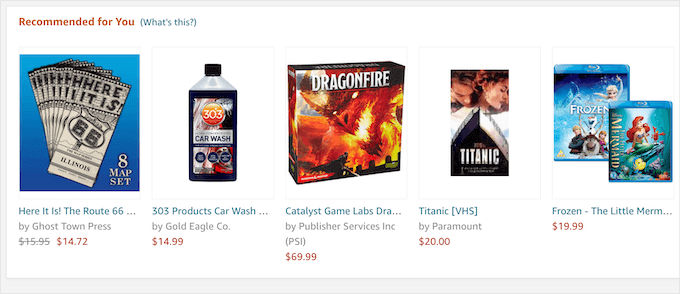
These recommendations are based on what your visitors have previously viewed or purchased. Amazon’s algorithm learns over time, so these suggestions become more relevant as you get traffic.
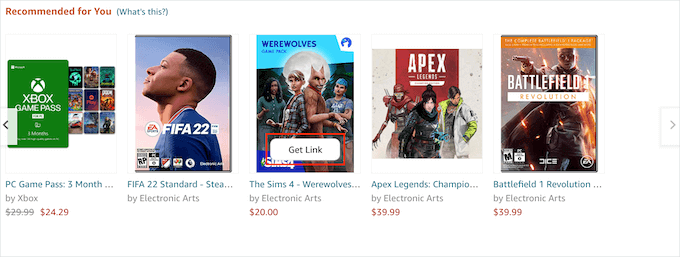
To create an affiliate link for any recommended product, hover your mouse over the product image and click the Get Link button that appears.
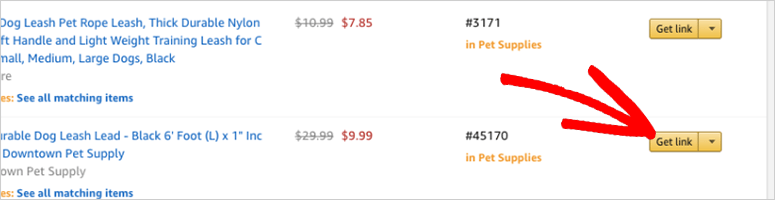
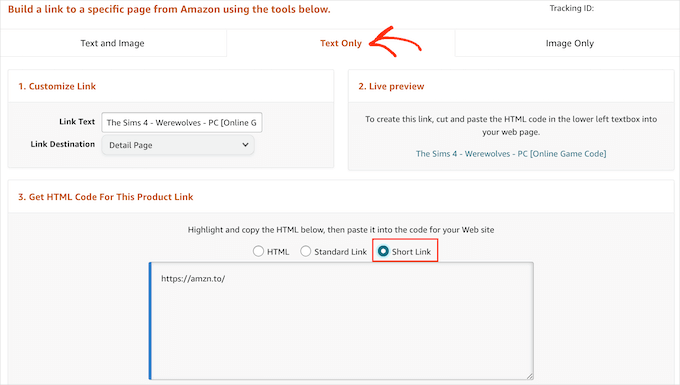
On the next page, click the Text Only tab, then select the Short link option. Once done, Amazon will generate a clean, trackable affiliate URL that you can use on your site.
Method 2: Using SiteStripe (My Preferred Method)
This is the method I use most often because it’s faster and works while you’re browsing Amazon normally.
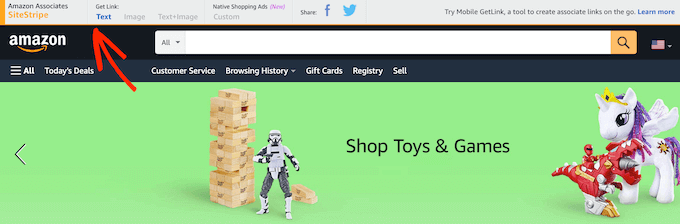
Once you’re logged into your Amazon Associates account, you’ll see a special SiteStripe banner at the top of every Amazon page you visit.
Now you can browse Amazon just like a regular shopper. When you find a product you want to promote, simply click Get Link in the SiteStripe banner.
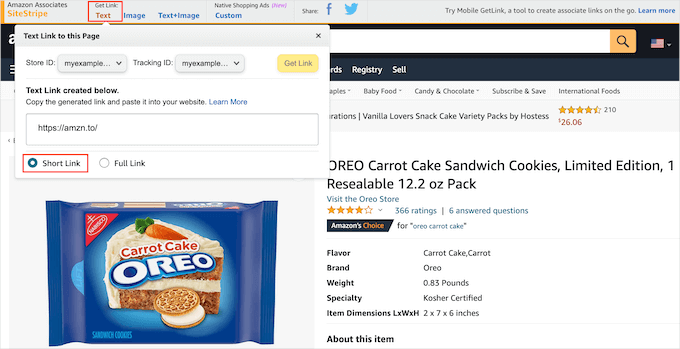
In the popup that appears, click the Short link option. Copy this URL; that’s your affiliate link.
This method is incredibly convenient because you can shop naturally, adding products to your affiliate store as you discover them.
How to Choose the Right Products
Here’s where strategy matters. Not all products convert equally well, and randomly adding products won’t build a successful affiliate store.
The key is understanding your audience. Who visits your site? What problems are they trying to solve? What products would genuinely help them?
For example:
- Running a recipe blog? Your readers probably want cookware, small kitchen appliances, everyday kitchen tools, and pantry staples.
- Building a photography resource site? Focus on cameras, lenses, tripods, lighting equipment, and editing software.
- Creating a home improvement site? Promote tools, materials, and home décor that match your content.
The best affiliate stores align products with content. If you write a tutorial on “How to Build a Home Gym,” naturally, feature the exact equipment you recommend in that article.
To identify what your audience wants, use analytics tools to see:
- Which pages get the most traffic
- What search terms bring people to your site
- How long visitors spend on different pages
- Which topics generate the most engagement
This data reveals what your audience cares about, helping you choose products they’ll actually buy.
⚠️ Another smart strategy: Focus on product categories with higher commission rates. Amazon’s commission structure varies dramatically by category; some pay 10%, others pay just 1%. Check Amazon’s commission rate table to see which categories offer the best returns.
Once you’ve identified products that match your audience and offer good commissions, you’re ready to add them to your store.
Step 4. Adding Amazon Affiliate Products in WooCommerce
WooCommerce makes it incredibly easy to add Amazon affiliate products to your store.
The key is using WooCommerce’s built-in External/Affiliate product type, which displays products beautifully while sending buyers directly to Amazon when they click the purchase button.
Let me walk you through the exact process I use.
Creating Your First Affiliate Product
In your WordPress dashboard, go to Products → Add New.
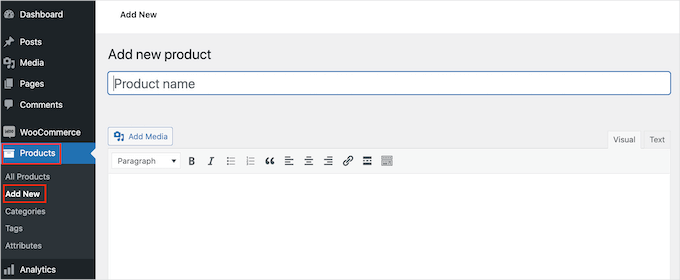
Next, you’ll see a screen that looks similar to creating a blog post. Start by entering a compelling product title at the top.
Next, add a detailed product description in the main editor area. This is where you sell the benefits, explain features, and give readers reasons to click through to Amazon.
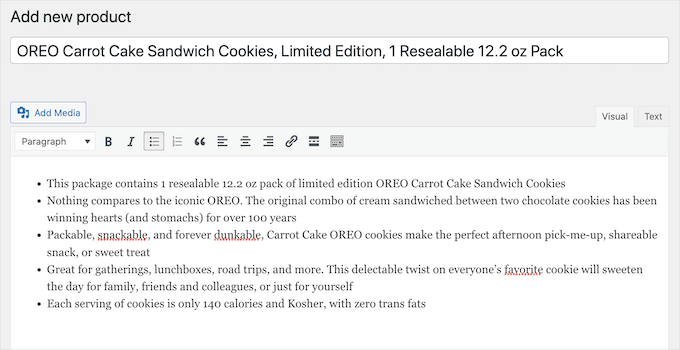
Your description should be helpful and informative; don’t just copy from Amazon.
Think of this as your personal recommendation. What do you like about this product? How would it solve your reader’s problem? Why are you promoting it?
⚠️ Important: Never copy product descriptions directly from Amazon. This violates their terms of service and can get your affiliate account suspended. Write original content that adds value.
Setting Up the Affiliate Product Type
Once done, scroll down to the Product data box. By default, it shows “Simple product.” Click this dropdown and select External/Affiliate product.
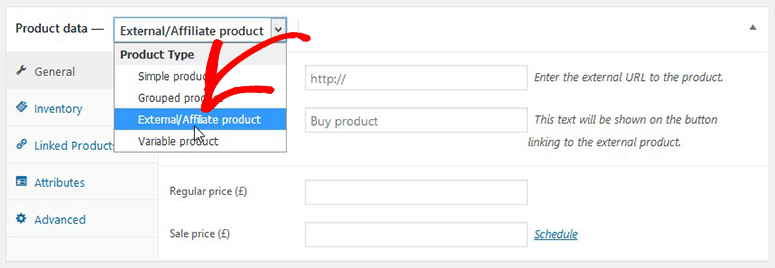
Now you’ll see two critical fields:
Product URL: Paste your Amazon affiliate link here. This is the URL you created in Step 3 using SiteStripe or Associates Central.
Button text: This is what appears on your button. I recommend using something action-oriented like “Buy on Amazon,” “Check Price on Amazon,” or “See on Amazon.” Avoid generic text like “Buy Now” since you want visitors to know they’re going to Amazon.
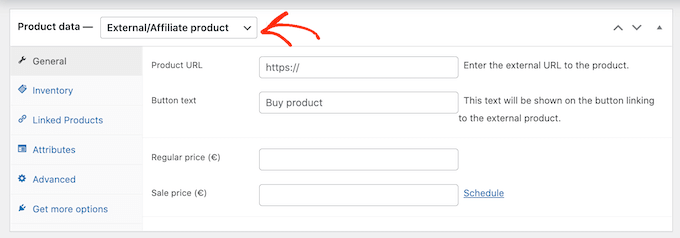
Critical Pricing Rule: Leave Prices Blank
Here’s something extremely important that trips up many beginners: Do NOT enter prices in the “Regular price” or “Sale price” fields.
Leave both fields completely empty.
Why? Amazon’s prices change constantly, sometimes even multiple times per day. Their affiliate program strictly requires that any price you display must be 100% accurate.
Remember, showing an outdated price, even by accident, violates their terms and can get your account suspended.
The safest approach is letting customers see the current price directly on Amazon when they click your affiliate link. This keeps you compliant and protects your account.
Adding a Product Short Description
Next, scroll down to the Product short description section. This text appears on your shop page, category pages, and search results. Basically anywhere the product is listed but not fully displayed.
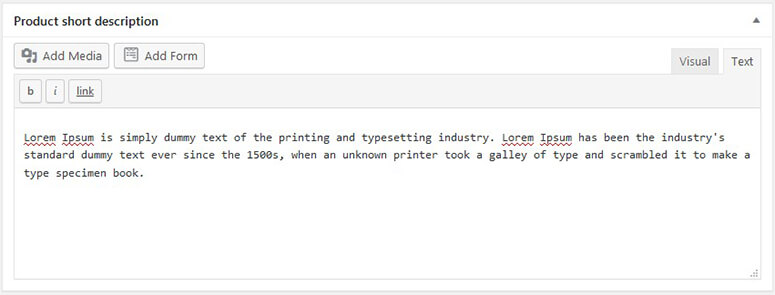
Keep this brief and compelling. Focus on the main benefit or unique selling point. Think of it as your “elevator pitch” for the product.
For example:
- “Professional-grade wireless headphones with 30-hour battery life and studio-quality sound”
- “Portable espresso maker perfect for camping, travel, and tiny kitchens”
- “Heavy-duty yoga mat with extra cushioning for sensitive joints”
Adding Product Images
Images are crucial for affiliate stores. They catch attention, showcase products, and dramatically increase click-through rates.
For this, click Set product image in the right sidebar to upload your main product image.
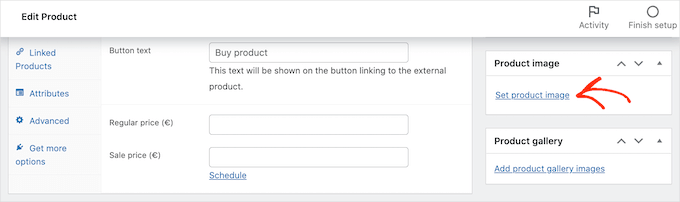
⚠️ CRITICAL WARNING: You cannot simply download images from Amazon and re-upload them to your site. This is one of the most common reasons Amazon suspends affiliate accounts.
Instead, use images from these approved sources:
- Amazon’s official image links through SiteStripe or Associates Central
- Manufacturer websites: check their media/press pages for official product photos
- Your own photos: if you own the product
- Licensed stock photos that show the product
If you want multiple images, click Add product gallery images to create an image gallery that visitors can browse through.
Publishing Your Affiliate Product
Once everything looks good, click Publish in the top right corner.
That’s it! Your first Amazon affiliate product is now live in your store.
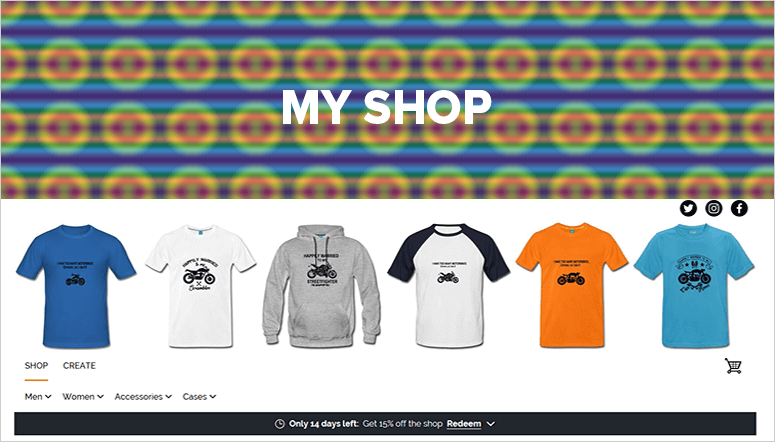
Visit your shop page to see it displayed. When visitors click the “Buy on Amazon” button, they’ll be redirected to Amazon with your affiliate tracking in place.
Adding More Products
Now repeat this process for each product you want to add. I recommend starting with 10-15 products in your main niche, then expanding from there as you see what converts.
As your store grows, you can organize products into categories like “Kitchen Gadgets,” “Fitness Equipment,” and “Tech Accessories” to help visitors find what they need quickly.
Step 5. Customizing Your WordPress Amazon Affiliate Store
At this point, your Amazon affiliate store is functional, but it probably looks pretty basic right now.
The design of your store directly impacts how many people click your affiliate links. A professional, trustworthy appearance can dramatically increase your earnings.
Let me show you how to transform your store from generic to gorgeous.
Choosing the Right Theme
WordPress themes control your site’s entire appearance: colors, fonts, layouts, and overall design.
The default WordPress theme has minimal WooCommerce support and won’t showcase your affiliate products effectively.
You need a theme specifically designed for WooCommerce stores.
There are hundreds of excellent options available. For affiliate stores specifically, I recommend checking out:
- Our best WooCommerce WordPress themes – Perfect for product-focused sites
- Our best WordPress themes for affiliate marketing – Optimized for conversions
These themes come with pre-built designs for shops, product pages, and landing pages that make your affiliate products look professional immediately.
Once you’ve chosen a theme, install it by going to Appearance → Themes → Add New in your WordPress dashboard. For detailed instructions, see my guide on how to install a WordPress theme.
Building a Custom Theme with SeedProd (My Preferred Method)
While pre-made themes work great, I actually prefer building completely custom designs using SeedProd. It’s the best WordPress page builder and is used by over 1 million websites.
Why do I love SeedProd for affiliate stores? Three reasons:
- No coding required: You build everything visually with drag-and-drop blocks. If you can use PowerPoint, you can use SeedProd.
- Built-in WooCommerce blocks: SeedProd includes special blocks designed specifically for WooCommerce stores, making it perfect for affiliate products.
- AI site builder: You give SeedProd a few instructions about your website, and it designs the entire site with AI for you. Seriously. It creates your homepage, shop page, product templates — everything. Plus, you just customize the results.
- AI content and design help: SeedProd’s AI can generate copy, headlines, images, and section layouts for product pages and landing pages. This saves time when creating affiliate pages and helps you publish faster without staring at a blank screen.
For a detailed look at everything SeedProd can do, check out my SeedProd review.
Using SeedProd’s WooCommerce Blocks
Once you install SeedProd, you get access to powerful WooCommerce-specific blocks that make your affiliate products look incredible.
For example, the Products Grid block lets you showcase multiple affiliate products in a beautiful, organized layout on any page.
Plus, it automatically pulls products from your WooCommerce store and displays them with images, descriptions, and your “Buy on Amazon” buttons.
While the Recent Products block displays recommendations of products that a user recently viewed but did not purchase.
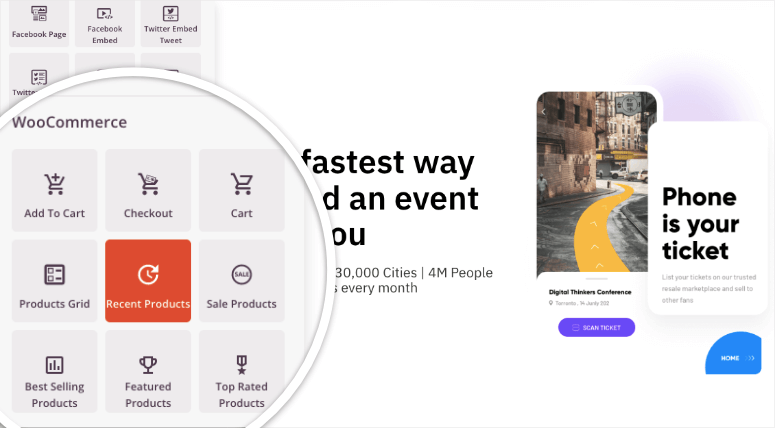
Other useful WooCommerce blocks include:
- Best Selling Products – Highlight your top-performing affiliate products
- Featured Products – Spotlight specific products you want to push
- Product Categories – Help visitors browse by category
Beyond WooCommerce blocks, SeedProd also includes conversion-boosting elements like:
- Product reviews and testimonials – Build trust with social proof
- Countdown timers – Create urgency for limited-time Amazon deals
- Star ratings – Show product quality at a glance
- Social share buttons – Let visitors share products they love
Using Pre-Built Templates
Don’t want to design from scratch? SeedProd includes ready-made templates for every type of page you need:
- Coming soon pages – Build buzz before launching
- Landing pages – Create focused product promotion pages
- Sales pages – Highlight specific high-commission products
- Thank you pages – Follow up after visitors click through to Amazon
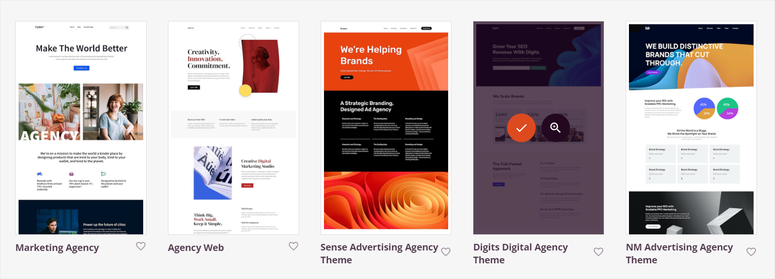
These templates are fully customizable, so you can adjust colors, fonts, images, and layouts to match your brand perfectly.
For a complete tutorial on building custom designs, see my guide on how to create a custom WordPress theme.
Creating High-Converting Product Pages
Here’s a pro tip: Don’t just add products and hope for clicks. Create dedicated blog posts and landing pages around your best products.
For example, instead of just listing “wireless headphones” in your shop, create:
- “The 5 Best Wireless Headphones for Working From Home”
- “Budget vs Premium: Which Wireless Headphones Are Worth It?”
- “How to Choose Wireless Headphones: Complete 2026 Guide”
These content pieces provide genuine value, rank in Google, and naturally lead to your affiliate products. This is how the most successful affiliate stores operate.
Bonus Tip: Resources to Grow Your Amazon Affiliate Store
Building your Amazon affiliate store is just the beginning. The real work starts now: driving traffic, optimizing for conversions, and maximizing your earnings.
The right tools make all the difference between a store that earns $50/month and one that generates serious income. Let me share the exact tools and strategies I use to grow affiliate stores.
1. Optimize with All in One SEO
Search engine optimization is the lifeblood of any affiliate store. The higher your product pages rank in Google, the more traffic you get, and the more traffic means more clicks on your Amazon affiliate links.
I recommend AIOSEO for WordPress as the best eCommerce SEO plugin available. It’s specifically designed to help WooCommerce stores rank better in search results.
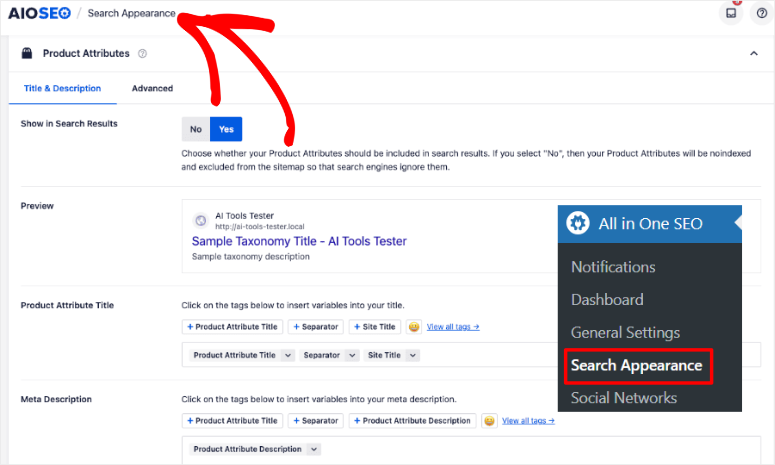
Here’s what makes All in One SEO essential for affiliate stores:
- Product schema markup: This adds special code to your product pages that helps Google understand what you’re selling. Your products can appear in rich snippets with images, prices, and ratings directly in search results – massively increasing click-through rates.
- WooCommerce SEO features: Built-in optimization specifically for product pages, categories, and shop pages. You don’t need to figure out SEO for eCommerce, it’s handled automatically.
- Smart linking assistant: Automatically suggests internal links between your products and blog posts. This keeps visitors browsing longer and increases the chances they’ll click through to Amazon.
- Social media integration: When people share your products on Facebook, Twitter, or Pinterest, All in One SEO ensures they look perfect with proper images and descriptions.
Check out my AIOSEO review for more details. Also, compare All in One SEO vs Yoast SEO to see why I switched to AIOSEO for all my affiliate projects.
If this SEO plugin sounds right for you, check out my All in One SEO coupon page for the best deals.
2. Track Your Affiliate Link Clicks With MonsterInsights
Here’s the truth about affiliate marketing: You can’t improve what you don’t measure.
For an Amazon affiliate store, your most important metric is affiliate link clicks. Your entire business model depends on sending visitors from your site to Amazon.
You need to know which products people actually click on.
This is where MonsterInsights becomes invaluable. It automatically tracks all your outbound affiliate links and shows you exactly which products your audience cares about.
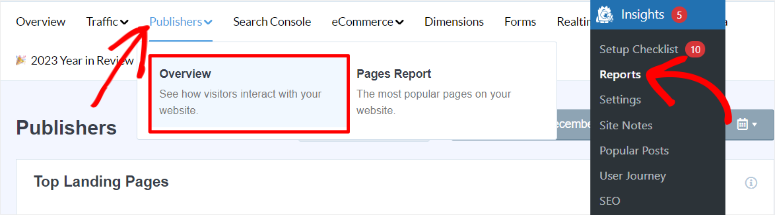
Here’s what MonsterInsights reveals:
- Top-performing products: See which affiliate links get the most clicks. Double down on these winners by creating more content around them.
- Low-performing products: Identify products that get views but no clicks. Either improve the presentation or remove them entirely.
- Traffic sources: Discover whether your clicks come from Google, social media, email, or direct traffic. This tells you where to focus your marketing efforts.
- User behavior: See how visitors navigate your store before clicking affiliate links. This reveals optimization opportunities you’d never notice otherwise.
Check out my MonsterInsights review for more details.
If this analytics plugin sounds right for you, check out my MonsterInsights coupon page for the best deals.
3. Recover Abandoned Carts With OptinMonster
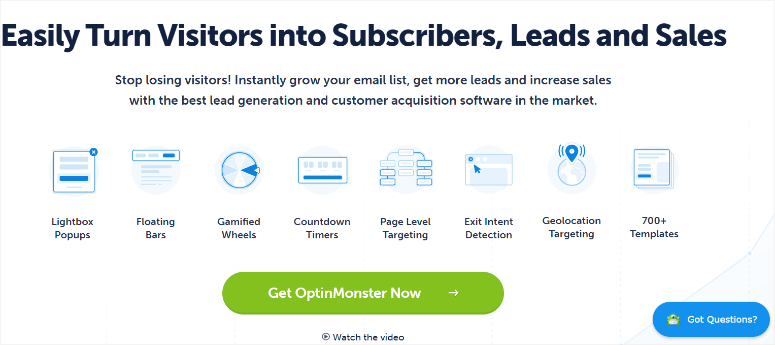
In traditional eCommerce, an “abandoned cart” happens when someone adds products but doesn’t complete checkout.
In affiliate stores, abandonment happens when visitors view products but leave without clicking your affiliate links.
This is where you’re losing money.
OptinMonster solves cart abandonment with Exit-Intent® technology. It detects the exact moment a visitor is about to leave your site and shows them a targeted popup to keep them engaged.
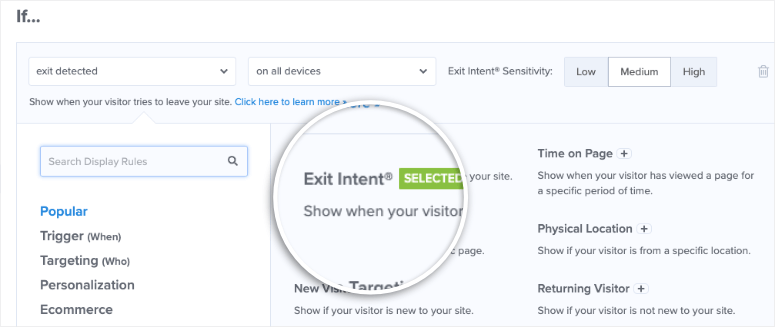
Here’s how I use OptinMonster on affiliate stores:
- Product-specific popups: When someone views a high-commission product but starts to leave, show them a popup highlighting that exact product with a strong call-to-action: “Wait! Check the current price on Amazon before you go.”
- Alternative recommendations: If someone views a product but doesn’t click, show them similar alternatives as they’re leaving: “Looking for wireless headphones? Here are 3 other top-rated options.”
- Email capture: Can’t convert them right now? Capture their email before they leave so you can follow up with targeted product recommendations later.
- Discount alerts: Since Amazon frequently changes prices, you can notify visitors: “Want to know when this product goes on sale? Get price drop alerts.”
The beauty of OptinMonster is its targeting rules. You can show different popups based on:
- Which product they viewed
- How long they spent on the page
- Whether they’ve visited before
- What device they’re using
- Where they came from (Google, Facebook, etc.)
This level of personalization dramatically increases engagement and conversions.
Check out my OptinMonster review for more details. Compare OptinMonster vs Thrive Leads to decide between lead generation tools.
If this lead capture tool sounds right for you, check out our OptinMonster coupon page for the best deals.
Keep Growing Your Store
The most successful Amazon affiliate stores share one thing in common: They never stop improving.
Keep adding new products that match trending searches in your niche. Write helpful product comparison posts that rank in Google. Use content marketing strategies to attract more qualified visitors.
Most importantly, pay attention to your data. Let MonsterInsights show you what’s working, optimize those winners with All in One SEO, and recover lost traffic with OptinMonster.
This combination of tools has helped me grow affiliate stores from zero to consistent four-figure monthly income. The same strategy will work for you.
That’s it! Now, to make sure you have completed every step, here is a simple table checklist for you to refer to.
| ✓ | Step | Key Actions | Time |
|---|---|---|---|
| ☐ | Step 1 WordPress & WooCommerce Setup | Sign up for Bluehost hosting, install WordPress, activate WooCommerce plugin, skip WooCommerce setup wizard | 45 min |
| ☐ | Step 2 Join Amazon Associates | Apply to Amazon Associates program, add your website domains, create your Store ID, complete profile questions | 20 min |
| ☐ | Step 3 Find Your First Products | Browse Amazon with SiteStripe enabled, select 10-15 products in your niche, copy affiliate links using "Get Link" button | 30 min |
| ☐ | Step 4 Add Products to WooCommerce | Create External/Affiliate products, paste Amazon links, add product images (not from Amazon!), write descriptions, leave prices blank | 2 hours |
| ☐ | Step 5 Customize Your Store | Choose and install a WooCommerce theme OR use SeedProd to build custom design, customize colors and layout | 1-2 hours |
| ☐ | Bonus Install Growth Tools | Add All in One SEO for search rankings, MonsterInsights for tracking clicks, OptinMonster for recovering lost visitors | 45 min |
| ☐ | Launch Go Live & Promote | Add affiliate disclosure statement, create first blog posts linking to products, share on social media, start building traffic | Ongoing |
Once you are done with the checklist, check out the commonly asked questions below if anything is unclear.
FAQs: Running an Amazon Affiliate Store Using WordPress
Update: Since I first published this guide, I’ve received dozens of questions from readers building their own Amazon affiliate stores. Here are the answers to the most common questions.
Can I add products from other affiliate networks?
Absolutely! WooCommerce isn’t limited to just Amazon products. You can add affiliate products from ShareASale, CJ Affiliate, individual brand programs like Nike or Apple, or any company that offers affiliate links. This diversification is actually a smart business strategy since relying solely on Amazon makes you vulnerable to their commission rate changes. Just use the same External/Affiliate product type and paste in whatever affiliate link you’re using.
I live outside the United States. Can I join the Amazon Affiliate program?
Yes! Amazon operates affiliate programs in over 17 countries, including the UK, Canada, Australia, Germany, France, Italy, Spain, Japan, India, and Brazil. Each country has its own separate program, though, so you’ll need to apply individually to each one. If you have visitors from multiple countries, apply to multiple programs so you can monetize all your traffic. Commission rates and product availability vary by country.
Do I need to disclose my affiliate partnership?
Yes, absolutely. Both the US Federal Trade Commission regulations and Amazon’s program policies require clear disclosure that you earn commissions from purchases. You must also include this exact statement somewhere visible: “As an Amazon Associate, I earn from qualifying purchases.” Most successful affiliate sites place this at the top or bottom of product pages, on a dedicated disclaimer page, and in the site footer. Failure to disclose can result in FTC fines and immediate termination of your Amazon account.
Can I promote Amazon products without creating an affiliate store?
Yes! Many successful affiliates simply write blog posts and insert affiliate links naturally within their content. If you run a blog on fitness, you might write “The 10 Best Resistance Bands for Home Workouts” and link to each product directly from the article. List articles actually work great for affiliate content. This approach works great if you want to focus on content rather than maintaining a product catalog. You don’t need WooCommerce at all for this method. The WooCommerce approach in this tutorial works best when you want a dedicated shopping experience with organized categories and a professional storefront.
What are the Amazon affiliate commission rates?
Commission rates vary significantly by product category and can change at Amazon’s discretion. As of 2026, rates typically range from 1% to 20% depending on the category. Luxury beauty and Amazon Fashion private label products earn 8-10%, while electronics and video games typically earn just 1-3%. For current rates, check the Amazon Associates Program Standard Commission Income Statement for your specific country. Smart affiliate marketers focus on higher-commission categories when possible since selling a $100 item at 10% earns ten times more than the same item at 1%.
Can I promote Amazon services?
Yes! Amazon offers fixed bounties for promoting various services like Amazon Prime trials, Music Unlimited subscriptions, Prime Video, Audible trials, and Amazon Business registrations. These bounties often pay $3-$15 per conversion and can be more profitable than low-commission physical products. Check your Amazon Associates dashboard for current bounty amounts and promotion terms.
What is the difference between Amazon Associates and Amazon Affiliates?
There’s no practical difference. Amazon Associates is the official name of the program you join. Amazon Affiliate is the informal title given to people who participate. Both terms refer to the same thing: marketers who earn commissions by promoting Amazon products.
How much does the Amazon Affiliate program cost?
Nothing. It’s completely free to join and maintain your Amazon Associates account. There are no monthly fees, no minimum sales requirements to stay active after your initial 180-day qualifying period, and no costs to generate affiliate links. The only investment is your time building and maintaining your store.
Final Verdict: Should You Build an Amazon Affiliate Store?
Here’s the honest truth: Building an Amazon affiliate store won’t make you rich overnight, but it’s one of the smartest low-risk ways to start earning online.
I’ve watched too many people overthink this decision for months, paralyzed by questions about the “perfect” niche or the “right” time to start. Meanwhile, someone else launches a simple store, learns from real traffic data, and starts earning commissions within 90 days.
The beauty of Amazon affiliate stores is that they cost almost nothing to test. For less than the price of dinner out, you can launch a real business, learn what converts, and build something that generates income while you sleep.
Will every product you promote be a winner? No. Will your first design be perfect? Definitely not. But you’ll learn more in one month of running a live store than in six months of planning.
Start simple. Pick a niche you actually understand, add 10-15 products you’d genuinely recommend, write helpful content around them, and see what happens.
The affiliate stores that succeed aren’t the ones with the fanciest designs or the most products. They’re the ones that help real people solve real problems and earn trust by being genuinely useful.
Your store doesn’t need to be perfect. It just needs to exist.
Resource Hub: Build a Successful Affiliate Business
Ready to take your affiliate store further? Here are the essential resources:
- Best WordPress hosting providers compared – Find faster hosting as your traffic grows
- How to start a successful WordPress blog – Build content that drives affiliate sales
- Best WooCommerce plugins for your store – Add powerful features to boost conversions
- Ultimate WordPress SEO guide for beginners – Rank higher and get more organic traffic
- How to create a landing page with WordPress – Build focused pages that convert visitors to clicks
- Best email marketing services compared – Capture emails and follow up with product recommendations
- Beginner’s guide on affiliate marketing – Learn everything you need to know before you dive into making your affiliate store.
These articles will not only help you create a better Amazon affiliate site, or an affiliate site in general, but they will also help you convert more.
The best time to start was six months ago. The second best time is today.
Hey! Can you use the images from Amazon? Is that not against copyright and their own Amazon rules? Would be great for confirmation? Cheers
Hey Lisa,
Great question! Using images from Amazon on your affiliate website can be a bit tricky, as it involves both copyright law and Amazon’s affiliate program policies.
If you manually download and re-upload Amazon’s images, you may violate their terms, leading to account suspension or termination.
According to the Amazon Associates Program Policies, you cannot download and re-upload product images directly from Amazon. Instead, you should use Amazon’s API (Product Advertising API) or their SiteStripe toolbar, which provides approved affiliate links and image embeds.
How to Fix/Remove Either “offers”, “review”, or “aggregateRating” should be specified error For amazon affiliate website with wocommerce
WordPress is one of the best software’s out there especially the add on’s & plug ins.This can be a good way to create a complete affiliate page or site with multiple items.I have been considering which programs to use.I know a few good ones that are free for funnels or pay by the month like click funnels.Word press is a more complex site in which you can do a lot with your web site or a store.You will need hosting and build it yourself or you want a simpler solution.It boils down to preference & what you ultimately want to do.
That’s the question I want to know
Can we ask a similar guide with the free plugin and theme
Hey Khalid, thanks for showing interest in this article. However, if you plan to make money with your Amazon affiliate store, we recommend investing in the right sources. Free plugins or themes will be limited in options and may not give you the exact result you’ll be expecting.
Step 1 is hard AF. LOL In all seriousness….
Hey, we guess Bluehost makes it not that hard anyway! 🙂
Do I have to have a website? I thought it was all through the Amazon app/website
Hey Misty, you do need a website to set up your store.
As Amazon affiliate I want to import many products under a category to my site and adding them individually takes a hell lot of time. Is there any way I can add a group of products to my site in one go?
Do it serverside on your host and import them into the table in the database with an SQL Query
Thanks for this informative guide. I’d like to ask if it’s possible to create an amazon affiliate store on my pre-existing website.
Great content, I was just wondering if when developing the Amazon affiliate ecommerce store, are plugins such as woozone, which imports products directly from Amazon allowed in 2020?
I didn’t try WooZone to be honest, but as it seems, it’s allowed.
Wow, grate informative article,i loved it.
Hi can I have a website hosted by constant contact. Is it possible to create the Amazon affiliate store? I see you only talk about wordpress
Hi, I’m new to the world of eCommerce. I’ve been doing thorough research trying to grasp the idea first to avoid costly mistake and waste of time and resources. However, I’m not quite clear on the difference between Amazon affiliate marketing using website or blog by way of product review and Amazon affiliate store?. And whether, Amazon affiliate store can be monetized using adsense?. Thanks
It can be monetized along with AdSense.
I’ll try it, if it doesn’t work I’ll hire a freelancer to do it for moi.