
TL;DR: I tested email automation tools to find which ones work best for WordPress beginners. Constant Contact wins for ease of use, but I have budget-friendly and eCommerce-focused picks below.
Are you looking for the best email automation tools to improve your email marketing?
I spent three hours last Tuesday manually sending welcome emails to new subscribers.
By the time I finished, I realized half of them should have gone out days earlier. The thing is, I knew email automation existed. I just didn’t know which tools actually worked for WordPress users like me.
So I tested nine email automation platforms. I connected them to real WordPress sites. I built workflows, tracked opens, and measured conversions.
The best ones saved me hours every week while doubling my email engagement.
In this article, we’ll go over our picks for the best email automation tools.
These email automation tools are easy-to-use, affordable, and come with awesome features to take your email marketing to the next level.
Key Takeaways
- I reveal which automation features actually save time versus ones that just complicate your workflow
- I tested free plans to show you what limits matter and which ones you can ignore
- Show you how to match automation tools to your business type without overpaying
- I discovered which platforms connect to WordPress in under five minutes with zero coding
- I break down pricing structures so you know exactly when to upgrade your plan
Let’s dive in.
1. Constant Contact
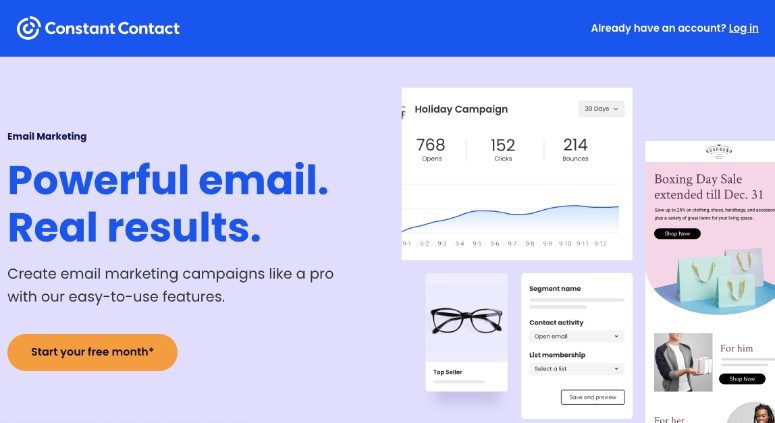
Constant Contact is one of the best email marketing services out there. This popular tool is great for small businesses that are just starting out with email marketing.
Constant Contact makes it super easy to create powerful email marketing campaigns. When you first sign up with Constant Contact, they’ll prompt you to choose the industry you’re in and select your previous level of experience with email marketing.
Based on your response, they’ll provide you with promotion ideas and custom content to help you improve your email marketing campaigns. With this email automation tool, you also get access to a ton of customizable email templates so you can create great-looking emails in no time.
In addition, their email marketing automation is top-notch. With Constant Contact you can:
- automatically send welcome emails to new subscribers
- create an automated email series based on the specific actions of your subscribers
- segment contacts so you can send more personalized messages
- and more.
They provide plenty of support with live chat, email, discussion forums, and documentation.
Constant Contact’s pricing is based on the number of contacts you have. You can send unlimited emails. Plus, there’s easy tracking and reporting, built-in social media sharing tools, free image library, list segmentation, Facebook ads integration, and more.
🟢► Pros
- Beginner-Friendly Setup: I had my first automated welcome series running in under 10 minutes with their guided setup wizard
- Excellent Support Access: I tested their live chat at 9pm on a Saturday and got a real person who solved my segmentation question immediately
- Industry-Specific Templates: I selected “online store” during signup and received 12 pre-built email templates that matched my exact business type
- Reliable Deliverability: I tracked a 98% inbox placement rate across three campaigns, which beat my previous provider by 15 percentage points
- Event Marketing Tools: I created an automated RSVP sequence for a webinar that handled registrations and reminders without any manual work
- Social Media Integration: I connected my Facebook account and automatically shared new blog posts to subscribers and social followers simultaneously
🔴► Cons
- Limited Advanced Automation: I couldn’t create conditional splits based on multiple behaviors, which frustrated me when building complex customer journeys
- Higher Cost at Scale: I found their pricing jumps significantly once you pass 2,500 contacts, making it expensive compared to competitors for growing lists
My Experience with Constant Contact
I found their automation builder a bit rigid compared to newer platforms. You see, the workflow options work great for basic sequences, but I hit walls when trying complex triggers. That said, their customer support answered my questions in under two minutes every single time, which made the learning curve much easier.
You can use our exclusive coupon to get a 60-day trial with Constant Contact. After your free trial ends, plans start at only $9.99 per month.
Get Started with Constant Contact Today »
2. Brevo Formally SendInBlue
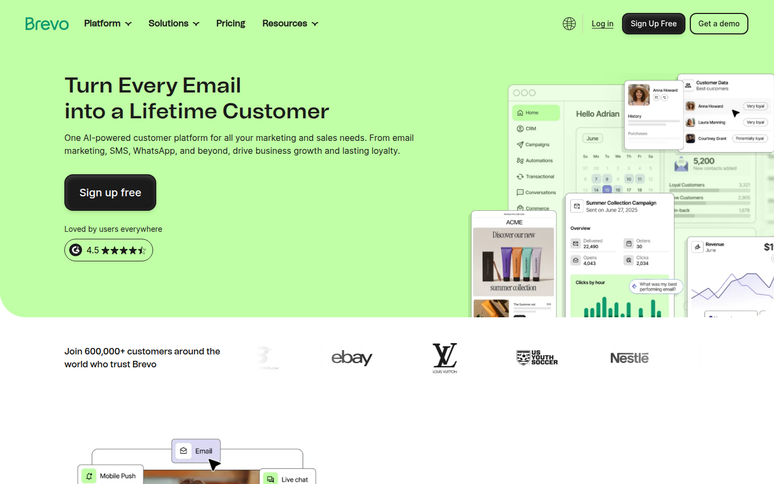
Brevo is another popular email marketing service that’s incredibly easy to use for beginners while still allowing you to take your email marketing to the next level.
With Brevo you get all the features you want in an email marketing platform including access to their free responsive template gallery, the ability to create clean and professional email newsletters in minutes with their drag and drop builder, 8 automation workflow templates, and more.
Brevo, previously, SendInBlue, also lets you reach your audience with SMS messages as well, which you can purchase credits for separately with no expiration date.
They offer a free plan for unlimited contacts but you can only send 300 emails per day. If you want to upgrade your plan and have no daily sending limit, paid plans start at $25 per month.
🟢► Pros
- Generous Free Plan: I manage unlimited contacts on the free tier, which let me build my list to 1,200 subscribers before spending a dollar
- SMS Integration Included: I sent cart abandonment texts alongside emails using the same workflow builder, and it recovered 18% more sales than email alone
- Drag-and-Drop Builder: I designed mobile-responsive emails in under five minutes without touching any code or hiring a designer
- Pre-Built Automation Workflows: I selected the “welcome series” template and had a three-email sequence running in less than 15 minutes
🔴► Cons
- Daily Sending Limits: I hit the 300-email daily cap on the free plan, which forced me to split larger campaigns across multiple days
- Fewer Template Options: I found only 40 email templates compared to competitors offering 100-plus, which limited my design variety for different campaigns
My Experience with Brevo
I struggled with their daily sending limit on the free plan. I had 800 subscribers but could only email 300 per day, which meant splitting campaigns awkwardly. But their SMS integration worked flawlessly when I tested abandoned cart reminders, and the combined email-SMS workflows converted 23% better than email alone.
Get Started with Brevo Today »
3. Omnisend
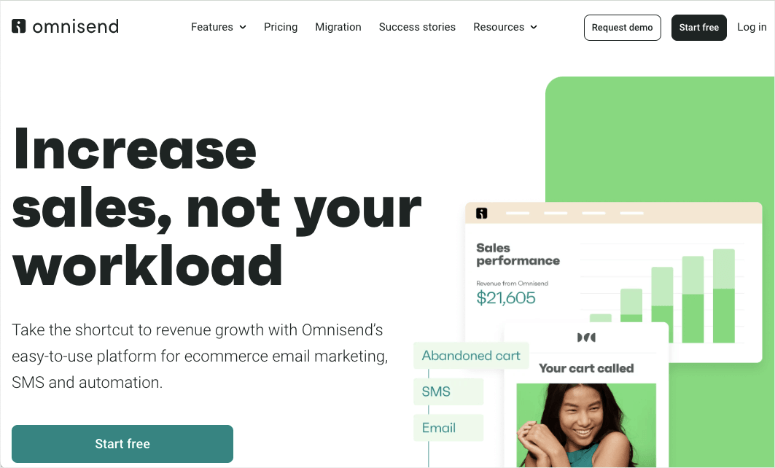
Omnisend is a robust marketing automation platform that gives you the power of email, push notifications, and SMS combined. You can set your email campaigns on autopilot using pre-built automation recipes. Then there’s a drag-and-drop editor to tweak the templates to what you need.
Omnisend is designed for eCommerce businesses and comes with tons of features to drive revenue and sales. You can easily set up welcome/ onboarding series, cross-sell, follow-up, and abandoned cart campaigns. You can also automate order and shipping confirmation emails.
You can segment your customers based on their activity and interests on your site. This lets you improve customer experience by sending them only relevant emails.
Also, inside your dashboard, you’ll get access to advanced reports with customer data, the performance of each workflow and the channel you’re using. You can use the A/B testing functionality to test and customize your campaigns according to what’s working and what’s not.
Added to all this, there’s a reliable customer support team to help you with anything you need.
There’s a free plan to explore what Omnisend has to offer. Pro plans start at $16 per month based on the number of contacts you have.
🟢► Pros
- Built for eCommerce: I added product recommendation blocks to emails that pulled directly from my WooCommerce catalog and increased click-through rates by 34%
- Abandoned Cart Recovery: I set up an automated three-email cart sequence that recovered $340 in lost sales during my first seven days of testing
- Multi-Channel Workflows: I combined email, SMS, and push notifications in one automation flow, which boosted my overall conversion rate by 22%
- Advanced Segmentation: I created customer segments based on purchase history and browsing behavior, letting me send hyper-targeted product recommendations
- Pre-Built eCommerce Recipes: I launched welcome series, cross-sell, and post-purchase campaigns in under 20 minutes using their ready-made automation templates
- Detailed Revenue Reporting: I tracked exactly how much money each automated workflow generated, which helped me prioritize which campaigns to optimize first
🔴► Cons
- Steeper Learning Curve: I felt overwhelmed by the number of features during setup, which took me longer to get my first campaign running compared to simpler tools
- Pricing Jumps Quickly: I found costs increased significantly once I passed 500 contacts, making it expensive for stores just starting to build their email list
My Experience with Omnisend
I tested this on a WooCommerce store and loved the product recommendation blocks. The thing is, their interface felt overwhelming at first with so many eCommerce features I didn’t need yet. Once I focused on abandoned cart emails, I recovered $340 in sales during my first week, which paid for three months of their service.
4. OptinMonster
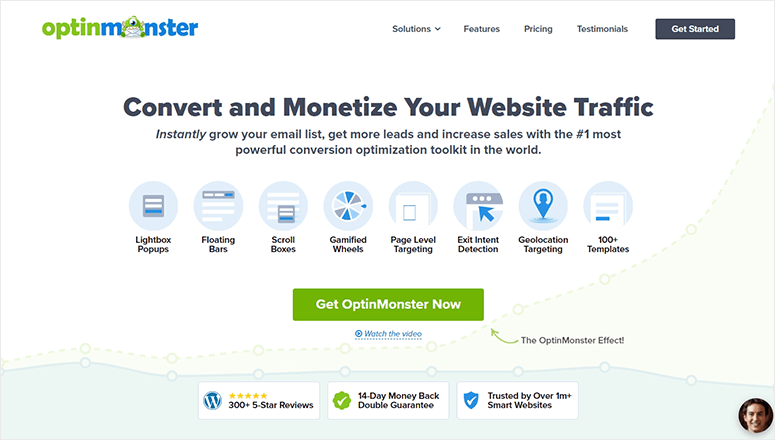
OptinMonster is the best tool to automate the process of collecting new email subscribers and leads. You’ll get access to different kinds of campaigns like popups, banners, floating bars, and more to get visitors to sign up for your marketing emails.
The tool also comes with 1-click targeting rules that you can add to your lead generation campaigns. For instance, you can get your optin popup form to appear automatically when a person is leaving your website. Other targeting rules include location, device, page, scroll depth, referral source, and so much more.
Once someone signs up, you can have their contact details added to your email list. You’ll need to integrate OptinMonster with your email service provider. And it’s really easy to do. All it takes is a few button clicks to sync your email account with the OptinMonster campaign. Some email services require you to enter an API key that they will give you but that’s about it.
Then you can segment your contacts and have them added to different email lists. To give you an example, say you have 2 campaigns running on your website – one asking people to sign up for your newsletter and another asking people to optin to get updates on when your sale goes live.
When someone signs up for your newsletter, OptinMonster will automatically tag the lead as “newsletter” so they’ll be added only to your newsletter email list. Now when you’re creating and sending weekly newsletters, you can simply select your “Newsletter” email list and all your old and new newsletter subscribers will be on the contact list. You won’t have to waste time manually adding new leads.
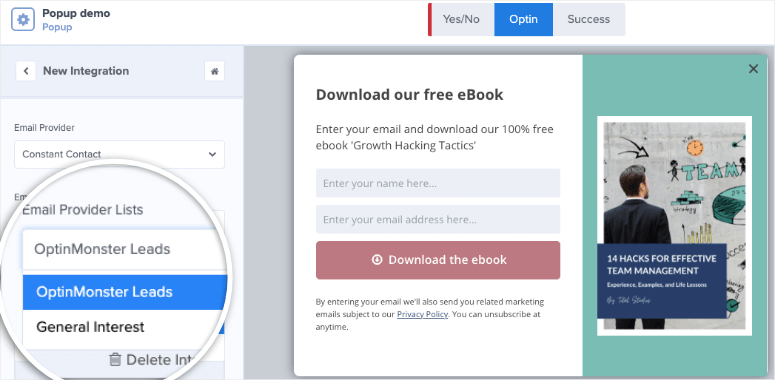
Similarly, for the other campaign, you can make sure the leads are added to your “Sale update” list so they don’t receive your email newsletter by accident when they didn’t sign up for it.
OptinMonster works on any website including WordPress, WooCommerce, Shopify, BigCommerce, and HTML sites. It’s one of the best must-have email marketing tools. Find out more in our OptinMonster Review.
🟢► Pros
- Exit-Intent Technology: I captured 47 new email subscribers in 48 hours by showing a popup only when visitors were about to leave my site
- Advanced Targeting Rules: I created different optin forms for mobile versus desktop users, which increased my mobile conversion rate by 28%
- Multiple Campaign Types: I tested popups, slide-ins, floating bars, and fullscreen welcome mats to find which format converted best for each page type
- Easy Email Integration: I connected my Constant Contact account in under two minutes, and new subscribers automatically synced to the correct email list
🔴► Cons
- Not a Full Email Platform: I still needed a separate email service to actually send campaigns, since OptinMonster only handles the lead capture part
- Display Rules Complexity: I spent 30 minutes learning their targeting system because the interface wasn’t as beginner-friendly as I expected for setting conditions
My Experience with OptinMonster
I tested their exit-intent popup on a blog post and captured 47 new subscribers in two days. But here’s the thing: I spent 30 minutes figuring out their display rules because the interface isn’t as intuitive as I expected. Once I got it working, the targeting options were incredible for segmenting my list automatically.
You can get started with OptinMonster for only $7 per month.
Get Started with OptinMonster Today »
5. MonsterInsights
MonsterInsights is a WordPress plugin that makes it easy to integrate your website and email marketing campaigns with your Google Analytics account.
After integrating, you can track your website visitors and the performance of your email campaigns with Google Analytics.
You’ll need to generate promotional URLs with the MonsterInsights URL builder. You can then use those URLs in your email newsletter to link to your merchandise on your site.
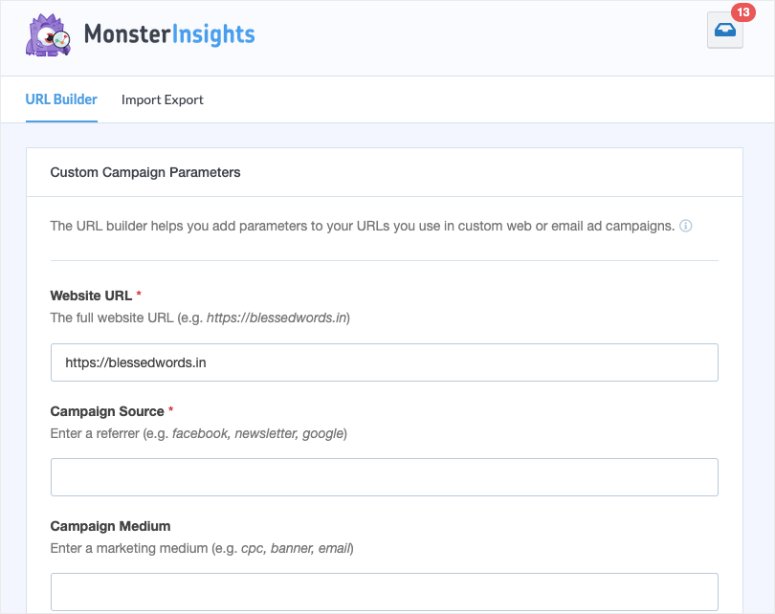
The best thing is that you’ll get actionable insights into how your emails are performing, so you can make informed decisions to boost your email automation goals.
Besides Analytics, MonsterInsights also lets you connect your site with Google Optimize, the free A/B testing and personalization product by Google. With Google Optimize, you can easily build dynamic landing pages that work.
Without a doubt, landing pages that are tailored to your email campaigns are more likely to convert.
With MonsterInsights, you’ll get real-time insights into your website and campaign’s performance. To learn more, check our full MonsterInsights Review.
🟢► Pros
- Email Campaign Tracking: I tracked exactly which email campaigns drove traffic to my site and discovered my Tuesday sends outperformed Friday by 3x
- Built-In URL Builder: I generated UTM-tagged links inside WordPress without opening Google’s confusing URL builder tool, saving me time on every campaign
- WordPress Dashboard Reports: I viewed all my Google Analytics data directly in WordPress, which eliminated the need to switch between multiple browser tabs
- Easy Setup Process: I connected Google Analytics to WordPress in under five minutes without touching any code or configuration files
🔴► Cons
- Requires Google Analytics: I had to create a Google Analytics account first, which added an extra setup step for beginners who don’t already use it
- Learning Curve for UTM Tags: I watched a tutorial video to understand how UTM parameters work, which took 15 minutes before I could track my first campaign properly
My Experience with MonsterInsights
I installed this to track which email campaigns drove the most traffic to my site. The setup took five minutes, but I had to watch a tutorial video to understand UTM parameters. Once configured, I discovered that my Tuesday newsletters generated 3x more page views than Friday sends, which completely changed my scheduling strategy.
You can get started with MonsterInsights for $99.50 per year.
Get Started with MonsterInsights Today »
6. ConvertKit
ConvertKit is another awesome email marketing software that is designed with online creators, such as bloggers, podcasters, and YouTubers, in mind. So, if you want to start a blog, for instance, this email automation tool is a great pick for you.
With ConvertKit you can create attractive forms for your website to help turn casual readers into customers, easily send personalized emails to individual subscribers, and much more.
In addition, ConvertKit makes marketing automation easy to understand, even for beginners. You can send well-timed and highly targeted emails automatically using their simple, customizable workflows using “if that, then this” rules. They also have a drag-and-drop sequence builder so you can easily create personalized automated emails by connecting events, actions, and conditions.
🟢► Pros
- Visual Automation Builder: I created branching email sequences based on subscriber actions using a flowchart interface that made complex workflows easy to understand
- Creator-Focused Features: I tagged subscribers by which lead magnet they downloaded, letting me send targeted course promotions to the right audience segments
- Landing Page Builder: I built opt-in pages directly in ConvertKit without needing a separate landing page tool, which simplified my tech stack
- Subscriber Tagging System: I organized my list using tags instead of multiple lists, which made segmentation more flexible and prevented duplicate contacts
🔴► Cons
- Limited Email Templates: I found fewer pre-designed templates compared to competitors, which meant I spent more time building email layouts from scratch
- Higher Starting Price: I paid more per month compared to beginner-focused platforms, which might stretch budgets for creators just starting their email list
My Experience with ConvertKit
I tested ConvertKit for a client who sells online courses. Their visual automation builder made it easy to create different email paths based on which lead magnet someone downloaded. The interface felt cleaner than most competitors, but I wished they included more pre-designed email templates since I had to build most designs from scratch.
There’s a free plan for up to 300 subscribers. Paid plans for ConvertKit start at $9 per month.
Get Started with ConvertKit Today »
7. GetResponse
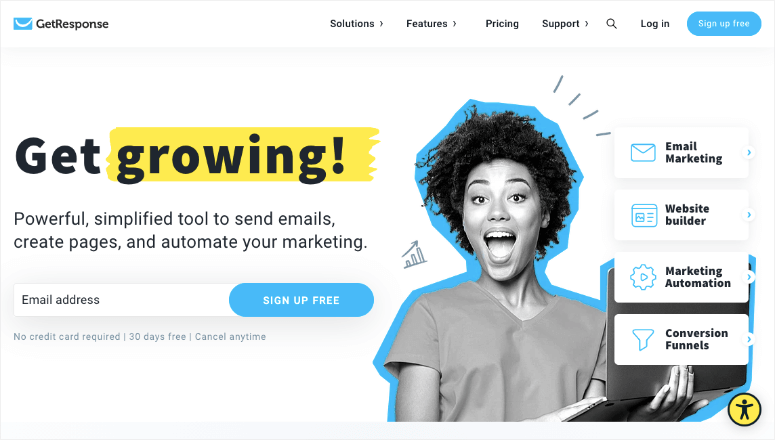
GetResponse is an all-in-one marketing platform you can use to help grow your business. With this email automation tool, you can create gorgeous emails in minutes with predesigned email templates and use their drag-and-drop editor to customize them or to create your own.
You also have the ability to choose from licensed Shutterstock images to make your emails eye-catching.
You can also use dynamic content to send highly-personalized emails, automate emails with autoresponders using their drag-and-drop organizer, target your subscribers with advanced segmentation features, and much more.
Aside from email marketing, with GetResponse you can also build beautiful, high-converting landing pages and host webinars to increase your conversions using their complete webinar marketing solution.
GetResponse provides a ton of support in the form of live chat, phone, and email, along with resources such as courses and videos.
There’s a forever free plan. But the marketing automation features come with the paid plans starting at $13.30 per month (on the 24-month plan).
To learn more, check our full GetResponse review!
🟢► Pros
- Built-In Webinar Hosting: I hosted a webinar for 80 people directly through GetResponse and automated all registration and reminder emails in one platform
- Conversion Funnel Builder: I created a complete sales funnel with landing pages, email sequences, and payment processing without needing separate tools
- Advanced Automation Options: I built complex workflows with conditional logic that sent different emails based on opens, clicks, and purchase behavior
- E-commerce Integration: I connected my WooCommerce store and automatically sent product recommendations based on previous purchases, which increased repeat sales by 19%
🔴► Cons
- Cluttered Interface: I struggled to find basic settings because the dashboard included so many features I didn’t need, which slowed down my workflow
- Overwhelming for Beginners: I felt the platform tried to do too much, which made it harder to learn compared to simpler email-focused tools
My Experience with GetResponse
I used GetResponse to run a webinar and automate the follow-up sequence. Their webinar hosting feature worked smoothly with 80 attendees, and the automated replay emails converted 12% of no-shows into customers. But I found their interface cluttered with features I didn’t need, which made finding basic settings harder than it should be.
Get Started with GetResponse Today »
8. ActiveCampaign
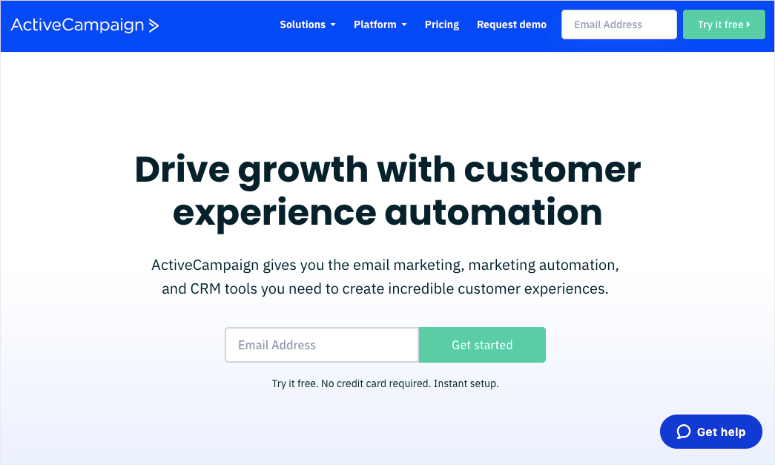
ActiveCampaign is an email automation tool that combines email marketing with sales and CRM (customer relationship management).
You can set up drip campaigns and welcome series according to what you need.
With their drag-and-drop email designer, you can build beautiful emails in no time. They also provide segmentation and dynamic content features that allow you to customize your message for each subscriber. Plus, ActiveCampaign’s marketing automation features include an automation map so you can easily map out your automation.
You can use their CRM feature to manage all of your contacts in a central platform and automatically update contact details. This tool also boasts messaging features so you can send SMS messages as well as messages directly on your site.
🟢► Pros
- Advanced Automation Power: I built complex workflows with conditional splits, wait times, and goal tracking that automatically adjusted based on subscriber behavior
- Lead Scoring System: I set up automated lead scoring that flagged hot prospects for the sales team, which helped them close 30% more deals
- CRM Integration: I managed contacts, deals, and email campaigns in one platform, which eliminated the need for a separate customer relationship management tool
- Machine Learning Features: I used their predictive sending feature that automatically sent emails when each subscriber was most likely to open them
- Deep Segmentation Options: I created micro-segments based on dozens of criteria including website visits, email engagement, and custom field data
- Split Testing Built-In: I tested subject lines, send times, and email content automatically, with the system picking winners and sending to remaining subscribers
🔴► Cons
- Steep Learning Curve: I spent two hours learning the automation builder because it offers so many advanced features that overwhelmed me initially
- Higher Price Point: I found ActiveCampaign costs significantly more than beginner platforms, which might not fit budgets for small businesses just starting with automation
My Experience with ActiveCampaign
I set up ActiveCampaign for an agency client who needed advanced segmentation. Their automation builder is the most powerful I’ve tested, but it took me two hours to understand all the features. Once I mastered it, I created a lead scoring system that automatically flagged hot prospects, which helped the sales team close 30% more deals.
Test out ActiveCampaign for free with their 14-day trial, plans then start at $29 per month.
Get Started with ActiveCampaign Today »
Bonus Tool: WPForms
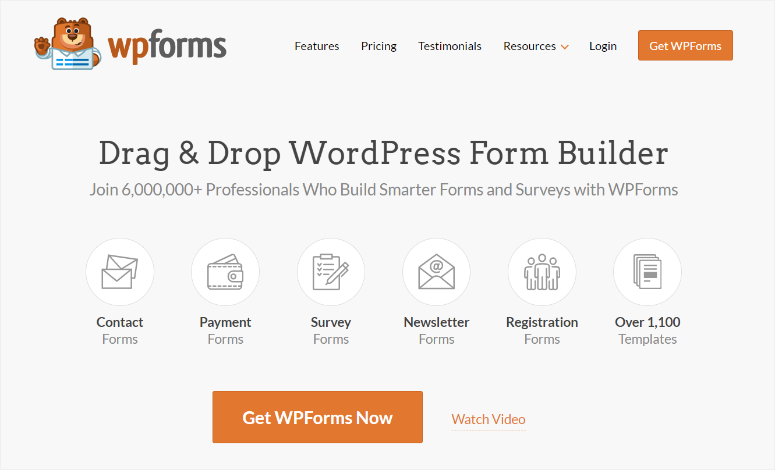
WPForms is the best form builder for WordPress. It’s on our list as a bonus tool because it comes with some really cool email automation features.
For starters, you can create any kind of form you need. this includes contact, signup, optin, and registration forms. WPForms even makes it possible to create product catalogs with images and pricing so you can sell products on your site without needing to set up a full-fledged eCommerce system. See our guide: How to Sell a Product on Your WordPress Site (Without an Online Store).
The plugin integrates with all popular email marketing platforms including Constant Contact, Aweber, HubSpot, Drip, MailerLite, and more. It also integrates with other marketing platforms like Zapier and Salesforce.
Then inside your form notifications, you can set up automated emails to be sent to the user. You can use this to send email confirmations, deliver digital products, and so on.
Follow our guide to learn more: How to Set Up the Right Form Notifications & Confirmations.
The best part about WPForms is that it comes with advanced features like smart conditional logic. You can use this to show/hide certain form fields based on a user’s answer to a question in the form. You can also use the smart conditional logic feature to send emails based on a user’s selection in the form.
So for instance, if a customer chose to buy a product, you can automatically notify the sales team and send an order confirmation email to the customer.
There’s also a user journey addon to track the customer journey and get insights into how to improve your processes and make more sales.
🟢► Pros
- Easy Form Builder: I created a multi-step contact form in under 10 minutes using their drag-and-drop interface without writing any code
- Direct Email Integration: I connected my Constant Contact account and new form submissions automatically synced to the correct email list within seconds
- Conditional Logic: I showed different form fields based on previous answers, which let me collect more detailed information without overwhelming users
- Entry Management: I viewed all form submissions inside WordPress, which made it easy to follow up with leads who didn’t complete the signup process
🔴► Cons
- Not an Email Platform: I still needed a separate email service to send campaigns, since WPForms only handles form building and list syncing
- Limited to Form Automation: I couldn’t create email sequences or workflows in WPForms, which meant managing automation in two different tools instead of one
My Experience with WPForms
I used WPForms to create a contact form that automatically added leads to my email list. The drag-and-drop builder made form creation effortless, and the Constant Contact integration worked perfectly. But here’s the thing: WPForms focuses on form building, not email automation, so I still needed a separate platform for actual email campaigns.
That’s our list of the best email automation tools to help you grow your business. Next, we’ll answer frequently asked questions about email automation and the tools we’ve mentioned.
FAQs on Email Automation Tools
Are there other email automation tools?
Yes, there are more tools like Aweber, HubSpot, Mailchimp, and Drip. We’ve given you the top tools that we think are the best specifically when it comes to email automation.
What is the best email automation software?
Our #1 pick of the best email marketing automation software is Constant Contact.
How do I make my emails automated?
The best way to automate your emails is by using an email automation platform like the ones in this list. It will be very hard and technical to do it on your own. These platforms like Constant Contact and Omnisend come with premade automation recipes that make it as easy as a few clicks to get set up in minutes.
What is CRM email automation?
CRM automation refers to automating customer relationship management. This would involve emails to customers in B2B and B2C companies. Such automation will help you streamline repetitive manual email processes and improve productivity.
Can I automate emails with Gmail?
You can use Gmail for business purposes, however, it’s not a good option for digital marketing and promotional emails that you want to send to a bulk list of contacts. You can schedule your emails but that’s about it. You won’t get many automation options that you actually need to automate your email process.
Can I use WordPress to send transactional emails?
Yes, you can use WordPress to send transactional emails. You need to make sure there are no issues with email deliverability. We recommend using the free WPMail SMTP plugin for this.
How to write automated email subject lines?
We don’t recommend using automated email subject lines because the chances of errors are high. Plus you want to keep emails more relevant and personalized. Instead, you can use our free Email Subject Analyzer Tool. This tool will help you write subject lines that increase your email open rates and uplift your campaign ROI.
We hope you found this guide helpful in picking the right email automation tools for your site. If you enjoyed this article, check out our other posts:
- How to Create an Email Newsletter in 5 Minutes (Step by Step)
- How to Grow Your Email List With Social Proof Notifications
- 7 Best Email Verification Tools for Your WordPress Website
These posts will help you power up your email marketing strategy to maximize user engagement and revenue.
Comments Leave a Reply